
Cut losses before they grow
Livermore went broke several times because he let wrong trades drag on. Set your stop loss before every order and respect it, even when you feel price is about to turn
Jesse Livermore / The Great Bear of Wall Street
A Massachusetts farm boy who started posting stock prices at 14 and became the most famous speculator of the early 20th century. He made huge profits shorting the market in the crises of 1907 and 1929, but also went broke several times (TIME magazine counted 4 by 1934). His life is the basis of the classic trading book Reminiscences of a Stock Operator.
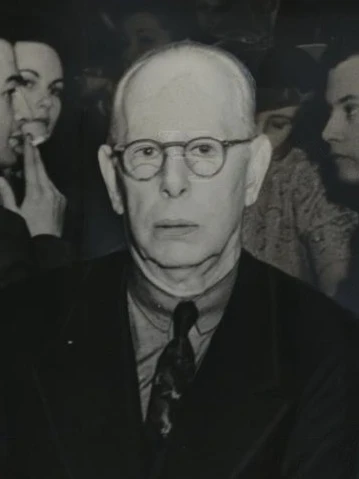
Press photo, 1940 / Wikimedia Commons
Livermore was born on 26 July 1877 in Shrewsbury, Massachusetts, to a poor farming family, and moved to Acton as a child. At 14 his father took him out of school to work on the farm, but he chose to leave home and find work in Boston, with his mother’s support.
In 1891 he got a job as a board boy, posting stock prices at the Boston office of the brokerage Paine, Webber & Co. (later PaineWebber), for $5 a week. The job let him watch prices move every day, and he began noting down price patterns that repeated.
The following year he made his first trade in a bucket shop, a parlour that took bets on stock prices without trading real shares. He put down $5 and made $3.12. After that he profited from these shops so consistently that many refused his orders, and he was nicknamed The Boy Plunger, before moving to New York in 1900.
Massachusetts · 1877–1891 Childhood in a farming family in Shrewsbury and Acton. He left school at 14, then left home to find work in Boston with his mother’s support.
The figures on the board are illustrative, not real prices
The first trade of a 15-year-old, in a parlour that took bets on stock prices without trading real shares
PAIDA turning point in his thinkingAs told in Reminiscences, when he moved to trading through a real brokerage in New York he lost almost all his capital at first, because the short-term betting that worked in bucket shops didn’t work in the real market. This experience turned him towards catching big trends and timing.
Livermore’s life was a cycle of getting rich and going broke. He made huge profits several times by shorting falling markets, but went broke 4 times, as counted by TIME magazine. This timeline covers the key highs and lows.
| YEAR | ENTRY | INK |
|---|---|---|
| 1891 | Starts as a board boy at Paine, Webber & Co.Boston office, $5 a week, at age 14 | EVENT |
| 1892 | First trade in a bucket shopPut down $5, made $3.12 | GAIN |
| 1900 | Moves to New York to tradeSwitches from bucket shops to trading through a real brokerage | EVENT |
| 1901 | Loses almost all his capital in the real marketHas to rebuild his capital from scratch | LOSS |
| 1906 | Shorts Union PacificBefore the San Francisco earthquake, making about $250,000 | GAIN |
| 1907 | Shorts the market in the Panic of 1907About $1 million in profit in a single day (some sources put his total for the crisis at about $3 million). He stopped shorting at the request of J.P. Morgan’s side | GAIN |
| 1908 | Heavy losses in cottonTrusted another cotton speculator’s advice and lost nearly everything | LOSS |
| 1915 | Files for bankruptcy | LOSS |
| 1917 | Repays his creditors in fullAfter profiting again during World War I | GAIN |
| 1923 | Reminiscences of a Stock Operator is publishedEdwin Lefèvre wrote it from Livermore’s life story, under the character name Larry Livingston | EVENT |
| 1929 | Shorts the stock market in the 1929 crashThe press reported a profit of about $100 million | LEGEND |
| 1934 | Bankrupt again (TIME counts it as the 4th time)Debts of about $2.26 million according to TIME, and suspended from the Chicago Board of Trade | LOSS |
| 1940 | Publishes How to Trade in StocksLater that year (28 Nov) he died by suicide in New York, aged 63 | EVENT |
In the late 1920s the US stock market rose strongly and steadily, driven largely by borrowed money (margin). According to the biography by Richard Smitten, Livermore believed prices had run far beyond fundamentals and gradually built short positions through several brokerages so no one could see his full size. At first the market kept rising, leaving him with paper losses for a while.
In late October 1929 the market slumped for several days in a row. The Dow Jones fell 12.82% on the 28th and another 11.73% on 29 October, when about 16 million shares traded. By mid-November the index had lost almost half its value from the peak. The press reported that Livermore made about $100 million and called him The Great Bear of Wall Street.
The fame came with hatred. Many people blamed him for the crash. He received death threats and had to hire bodyguards, and only a few years later most of the money was gone and he filed for bankruptcy in 1934. The lesson: one big win doesn’t guarantee long-term survival.
On 29 October 1929 about 16.4 million shares changed hands, so many that the ticker tape ran hours behind the real market. Anyone watching only the tape didn’t know the real price at that moment.
Points on the chart are Dow Jones closes on key days, not a daily chart
1TRADER is a partner (IB) and earns a commission when you open an account through our link · % is the share of IB commission returned to you · How to get rebates
Livermore had no modern charts. He read prices from a tape printed one trade at a time, and waited for price to pass a Pivotal Point before acting. Try being him for one round: read the tape step by step, choose whether to buy a test position, add to it or close it, then see how many of his rules you followed.
1 unit = 100 shares, up to 4 units. All three tapes are made-up prices for learning, not real data.
Livermore stressed that big money comes from holding a winning position long enough, not from trading in and out often. Adjust the win rate and the average win-to-loss size to see which kind of system has the edge over time.
In How to Trade in Stocks, Livermore explains the Pivotal Point: a key price level that, once price gets through it, often marks the start of a new move. He waited for price to reach that point and show confirmation before trading, rather than guessing in advance.
Although Livermore traded stocks and commodities, the same principle works well for currency pairs and gold (XAUUSD), because these markets have clear support, resistance and turning points. What matters is planning before price gets there, not deciding on emotion while price is running.
Each addition should be smaller or the same size, and move your stop loss with price. The proportions are an example, not Livermore’s formula.
Identify the main resistance and support on the daily chart, such as previous highs or lows where price reversed
Don’t enter before the level. Wait for price to clearly break through or bounce from it
Start small, with a stop loss on the other side of the key level
Add only when the first position is in profit, and never average down
Livermore didn’t trade Forex as we know it today. These steps apply his principles; practise on a demo account before using real money.
Livermore was a speculator who mainly read price action. He didn’t trade every day but waited for the market to give a clear signal, opened a first position to test his idea, and increased his size once the market proved him right. This approach became the foundation of trend following in later eras.
↻ Then go back to waiting for the next key level. Don’t trade just because you want to trade
Our opinions are what can be wrong. If price doesn’t do what you expected, trust price over your own ideas
In Reminiscences, the character based on him says the big money came from sitting on positions that were right, not from clever thinking or frequent trading
If your first trade is losing, don’t add money to lower your cost. That just means adding money to a wrong trade
People hope when they should fear, and fear when they should hope, so they hold losing trades too long and close winning trades too soon
Livermore went broke several times because he let wrong trades drag on. Set your stop loss before every order and respect it, even when you feel price is about to turn
Open a small test position first and increase size only if the market confirms. You lose little when wrong and gain a lot when right
The cotton losses of 1908 came from trusting others’ opinions instead of what price was saying. Learn to read trends yourself first
How to Trade in Stocks advises that every time you close a winning deal, you put half the profit aside, because money that always stays in the account can be lost on the next trade
Question 1 / 5
He made his first trade in 1892 in a Boston bucket shop, a parlour that took bets on stock prices, and made $3.12.
He was nicknamed The Great Bear of Wall Street for shorting the market in the crash. The Boy Plunger was his teenage nickname in Boston.
Reminiscences of a Stock Operator, written by Edwin Lefèvre and published in 1923.
He increased size when the market confirmed he was right, and never added money to a losing trade.
Expectancy per trade = 0.35 × 3 − 0.65 × 1 = +0.4 times the risk. This system only needs to win 25% of the time to break even.
Livermore’s lessons are most useful once you put them into practice. These tools on 1TRADER help you practise reading trends, planning and controlling risk starting today.
Open an account through 1TRADER and get cash back on every lot you trade, lowering your spread and commission costs over time.
How to get rebates, step by step →Leveraged trading carries high risk. Study the broker’s terms and the risk disclosure before opening an account.
The press at the time reported that he made about $100 million shorting the market in the 1929 crash, which would be more than $1 billion in today’s money. The figure is an estimate, because he never disclosed all his accounts.
It is a semi-biographical work that Edwin Lefèvre wrote from interviews with Livermore, using the character name Larry Livingston. The main events match his real life, but some details are told as fiction.
He used very large positions and high leverage, so he lost heavily when he was wrong. Both Reminiscences and his own book admit that his big losses came when he broke his own rules, such as trusting other people’s tips or jumping in before the right moment.
A key price level that, once price gets through it, often marks the start of a new move. He used it as his entry signal instead of guessing in advance which way price would go.
A parlour that took bets on stock price moves without trading real shares. Customers put down a small margin and won or lost based on the prices on the board. These shops were stamped out in the US in the early 20th century.
Educational content, not investment advice. Figures come from news reports and published books, and some differ between sources. Some details come from Reminiscences of a Stock Operator, which is semi-fictional. · risk disclosure · Forex glossary