
Look for asymmetric risk
A good trade loses little if wrong and makes a lot if right. Compare your stop loss distance with your profit target before opening a trade; if it’s not at least 1:2, it may not be the moment
George Soros / The man who broke the Bank of England
A refugee from Hungary who became the world’s most famous currency speculator. Founder of the Quantum Fund, he made about $1 billion shorting the pound in 1992, and his name is also linked to the 1997 Asian financial crisis
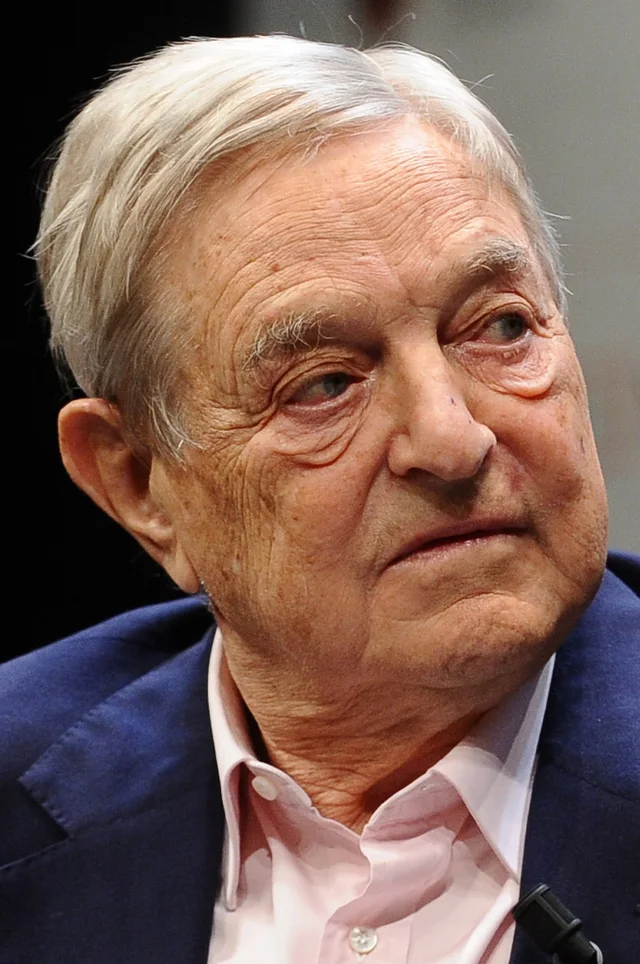
Photo: Niccolò Caranti / Wikimedia Commons (CC BY-SA)
Soros was born into a Jewish family in Budapest. When Nazi Germany occupied Hungary in 1944 he was just 13. The family survived by using forged papers to pass as Christians, and lived through the siege of Budapest in 1945
In 1947, aged 17, he moved to England, working part-time while studying at the London School of Economics, earning a bachelor’s degree in 1951 and a master’s in philosophy in 1954. There he studied under the philosopher Karl Popper
His first job in finance was as a clerk at Singer & Friedlander in London, before moving to New York in 1956 to trade European stock arbitrage and work as a European securities analyst in the early 1960s
Budapest · 1930–1947 Born into a Jewish family; survived the Nazi occupation in 1944 with forged papers
A turning point in his thinkingPopper’s idea that human knowledge is never complete became the foundation of how Soros saw markets all his life, and developed into the theory of Reflexivity
In 1963 Soros joined Arnhold and S. Bleichroeder and was given an experimental fund to run with the firm’s money. He later teamed up with Jim Rogers, who did the in-depth analysis while Soros made the trading decisions
| YEAR | EVENT | FLAG |
|---|---|---|
| 1969 | Sets up the Double Eagle fundStarting capital of about $4 million | EVENT |
| 1970 | Founds Soros Fund ManagementWith Jim Rogers as partner | EVENT |
| 1973 | Renamed the Quantum FundThe fund grew steadily through the 1970s | GAIN |
| 1980 | Jim Rogers leaves | EVENT |
| 1981 | Down about 22% for the yearInvestors withdraw heavily | LOSS |
| 1987 | Heavy losses in the Black Monday crashThe same year The Alchemy of Finance is published | LOSS |
| 1988 | Hires Stanley DruckenmillerAs lead fund manager | EVENT |
| 1992 | Shorts the pound on Black WednesdayProfit of about $1 billion | LEGEND |
| 1997 | Shorts Asian currencies early in the yearBefore the Asian financial crisis | GAIN |
| 2000 | Losses on technology stocksThe dot-com bubble bursts; Druckenmiller resigns | LOSS |
| 2011 | Becomes a family officeReturns all outside investors’ money | EVENT |
In the early 1990s Britain was in the European Exchange Rate Mechanism (ERM), which forced the pound to stay within a band against the German mark. Germany kept rates high to curb inflation after reunification, while Britain’s weak economy needed low rates. Defending the pound went against the fundamentals
Druckenmiller judged the pound overvalued and began building a short position. When he proposed a size of about $1.5 billion, Soros thought it too small and pushed him to expand it until the total position was worth about $10 billion
On 16 September 1992 the Bank of England bought pounds heavily and raised rates from 10% to 12%, then announced a further rise to 15% the same day, but the selling didn’t stop. That evening the government announced Britain was leaving the ERM. The pound later fell about 15% against the mark, and the Quantum Fund made about $1 billion
An approximate illustrative price line, not real minute-by-minute data
The pound was stuck at the bottom of its ERM band. If Britain held the line, the pound couldn’t bounce much because of the band; but if it broke out, the pound would fall hard. Try adjusting the values
A simplified model for learning, excluding interest costs, fees and volatility along the way. The Quantum Fund’s real numbers differ
Want to trade currencies Global Macro style? Open an account through 1TRADER and get cash back on every lot
Soros is a Global Macro trader: he looks at the macro economy, monetary policy and politics, then bets on the direction of currencies, interest rates and whole national markets. His thinking tool is Reflexivity: market participants’ beliefs don’t just reflect reality, they can change it
Look for times when the market believes more strongly than the fundamentals justify, and get in before the cycle turns
Open a small position to test the idea; increase size only if the market moves your way
Be ready to reverse your position as soon as the evidence changes
He said back pain was a warning sign that something was wrong with his portfolio
A good trade loses little if wrong and makes a lot if right. Compare your stop loss distance with your profit target before opening a trade; if it’s not at least 1:2, it may not be the moment
Increase size when your conviction is high and the market confirms, but stay within the risk limit you set for your account
Soros’s big trades started with reading whether a central bank was fighting the fundamentals
Even Soros lost heavily in 1987 and 2000. What kept him going was cutting losses and starting again
Question 1 / 5
Britain announced it was leaving the ERM on the evening of 16 September 1992
Druckenmiller proposed the trade before Soros ordered the position to be expanded
Belief and reality affect each other, letting prices overshoot fundamentals on the way up and the way down
In 2011 Soros returned outside investors’ money and turned the fund into a family office
The pound was stuck at the bottom of its band, so it could only bounce a little, but if it broke out it would fall hard. The risk was asymmetric
Lessons from the world’s great traders are most useful once you put them into practice. These tools on 1TRADER help you think and trade with a macro view starting today
Open an account through 1TRADER and get cash back on every lot you trade, lowering your spread and commission costs over time.
How to get rebates, step by step →Leveraged trading carries high risk. Study the broker’s terms and the risk disclosure before opening an account.
About $1 billion from shorting the pound on 16 September 1992, when Britain had to leave the ERM. Some sources estimate the total profit from related trades was higher
The Quantum Fund was one of the funds that shorted Asian currencies in 1997, but most economists see the main causes as currency pegs, high short-term foreign debt and domestic asset bubbles
The idea that market participants’ beliefs feed back and change the real fundamentals, and the changed fundamentals feed back into beliefs, creating a cycle that pushes prices beyond reality
In 2011 Soros returned outside investors’ money and turned the fund into a family office, so it no longer accepts outside money
Educational content, not investment advice. Figures come from published books and reports and may differ between sources. Charts and exchange rates on this page are approximate, for illustration · risk disclosure · Forex glossary